Knowledge That Saves Lives
Health education isn't just about memorizing facts—it's about empowering individuals and families to make informed decisions that can dramatically impact their quality of life. For Pakistani Americans in Rochester, culturally relevant health education addresses unique challenges and bridges gaps that mainstream healthcare sometimes overlooks.
PASOR recognizes that our community has specific health needs shaped by genetics, cultural practices, dietary habits, and social factors. By providing targeted health education, we help families navigate the American healthcare system while addressing conditions that disproportionately affect South Asian populations.
The Health Challenges Facing Our Community
Research consistently shows that South Asians face elevated risks for several serious health conditions:
Cardiovascular Disease: South Asians have higher rates of heart disease, often developing it at younger ages than other populations. Contributing factors include genetic predisposition, dietary habits, and lower levels of physical activity.
Type 2 Diabetes: The prevalence of diabetes is significantly higher among South Asians, even among those with normal body weight. Understanding risk factors and prevention strategies is crucial.
Certain Cancers: Our cancer awareness initiatives address cancers that affect our community, including breast, colorectal, and liver cancers. Expert physicians in our community help demystify screening and treatment.
Mental Health: Stigma surrounding mental health in South Asian cultures can prevent individuals from seeking help. Education helps normalize conversations about mental wellness.
Breaking Down Barriers
Several barriers prevent Pakistani Americans from accessing healthcare and health information:
Language: While many community members are fluent in English, medical terminology can be confusing. Having health information presented in Urdu or with cultural context improves comprehension.
Cultural Sensitivity: Healthcare settings don't always accommodate cultural practices around modesty, diet, and family involvement in medical decisions. PASOR events create spaces where these concerns are understood.
Lack of Trust: Some community members, particularly recent immigrants, may be unfamiliar with or distrustful of the American healthcare system. Education from trusted community members helps bridge this gap.
Financial Concerns: Fear of healthcare costs prevents some families from seeking care. Health education programs provide information about insurance options, free clinics, and financial assistance programs.
PASOR's Approach to Health Education
PASOR takes a comprehensive approach to community health education. Our initiatives include:
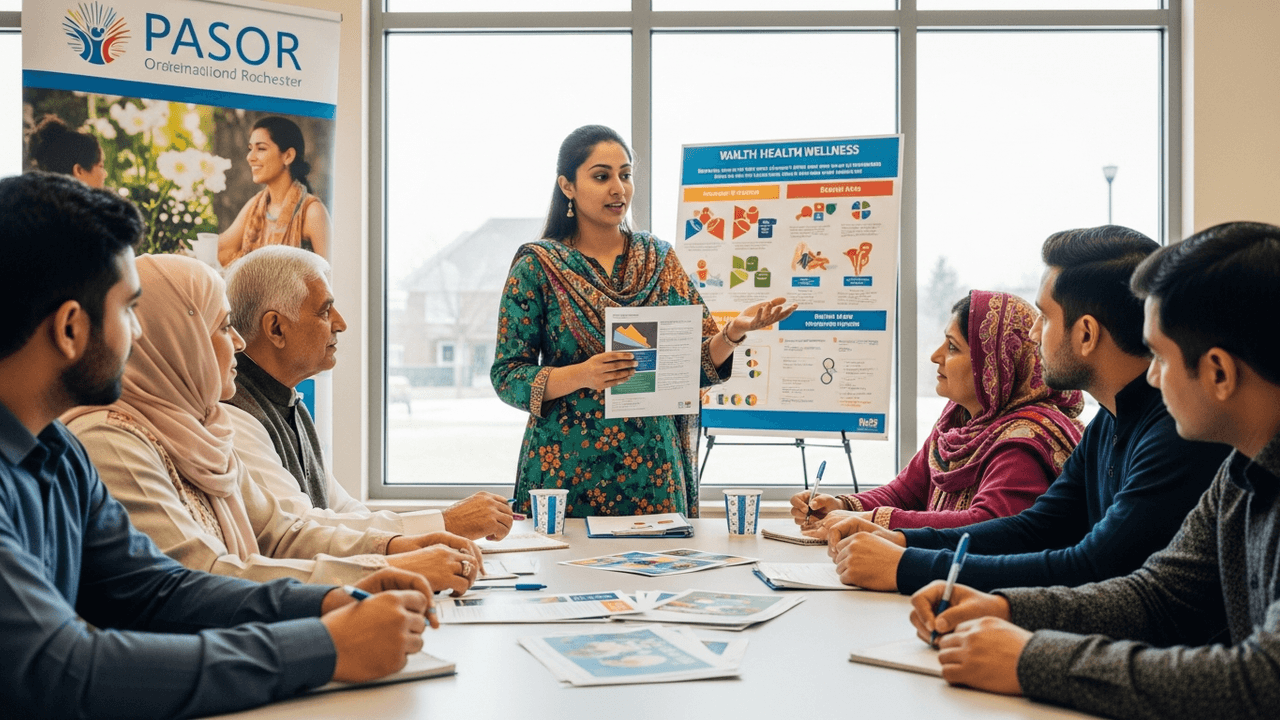
Health Seminars: Regular events covering topics like cancer awareness, heart health, diabetes management, and mental wellness. These seminars feature medical professionals from our community who understand our cultural context.
Screening Events: We partner with local healthcare providers to bring health events directly to our community, including blood pressure checks, glucose testing, and cancer screenings.
Resource Distribution: Informational materials in English and Urdu help families understand health topics and navigate the healthcare system.
Support Networks: Connecting patients with similar conditions helps reduce isolation and provides practical support during treatment.
The Power of Peer Education
Health messages are most effective when delivered by trusted peers. This is why PASOR emphasizes training community members to serve as health ambassadors.
These ambassadors share accurate health information within their social networks, encourage friends and family to attend screenings, and serve as bridges between community members and healthcare providers. Their work multiplies the impact of our formal programs.
Success Stories
The impact of our health education initiatives is reflected in countless success stories:
A community member who attended our diabetes seminar made lifestyle changes that brought his blood sugar under control without medication. A woman who learned about breast cancer symptoms at a PASOR event noticed a change and sought evaluation that led to early-stage diagnosis and successful treatment.
These stories, shared through our member testimonials, demonstrate the life-changing power of health education.
Children and Family Health
Health education isn't just for adults. PASOR programs include information for parents about childhood health topics, including nutrition, vaccinations, and mental health. By educating parents, we help ensure that children in our community grow up with the foundation for lifelong wellness.
We also recognize that health decisions in Pakistani families are often made collectively. Our programs acknowledge this by providing information that families can discuss together, respecting the role of elders while ensuring that accurate information reaches decision-makers.
Connecting Health to Community Values
Pakistani culture places high value on family, community, and caring for others. PASOR's health education programs connect these values to health behaviors.
When we frame regular checkups as a responsibility to family—ensuring you'll be healthy to care for your children and eventually grandchildren—the message resonates more deeply than generic health advice. When we emphasize that taking care of your health enables you to serve your community, it aligns with values of service and contribution.
Your Role in Community Health
Every community member has a role to play in promoting health education:
- Attend events: Your presence supports PASOR's health initiatives and gives you valuable information
- Share knowledge: Pass along what you learn to family and friends
- Get screened: Model healthy behavior by staying current on recommended screenings
- Support others: Encourage community members to seek care when needed
- Volunteer: Help organize and promote community health events
Beyond Individual Health
Community health education benefits not just individuals but the entire community. When community members are healthy, they can work productively, care for their families, and contribute to community life. Reduced health crises mean less strain on families and community resources.
A healthier community is also a stronger community—better positioned to build the connections that support everyone's wellbeing.
Looking Forward
PASOR continues to expand our health education initiatives based on community feedback and emerging health needs. We're developing new programs, partnerships, and resources to serve our community better.
Learn how to get involved with PASOR this year and join us in promoting health throughout our community. Whether you're a medical professional looking to volunteer or a community member wanting to learn, there's a place for you.
Together, we can build the healthiest possible future for Pakistani Americans in Rochester. Health education is the foundation—and your participation makes it possible.