Behind the Medical Education
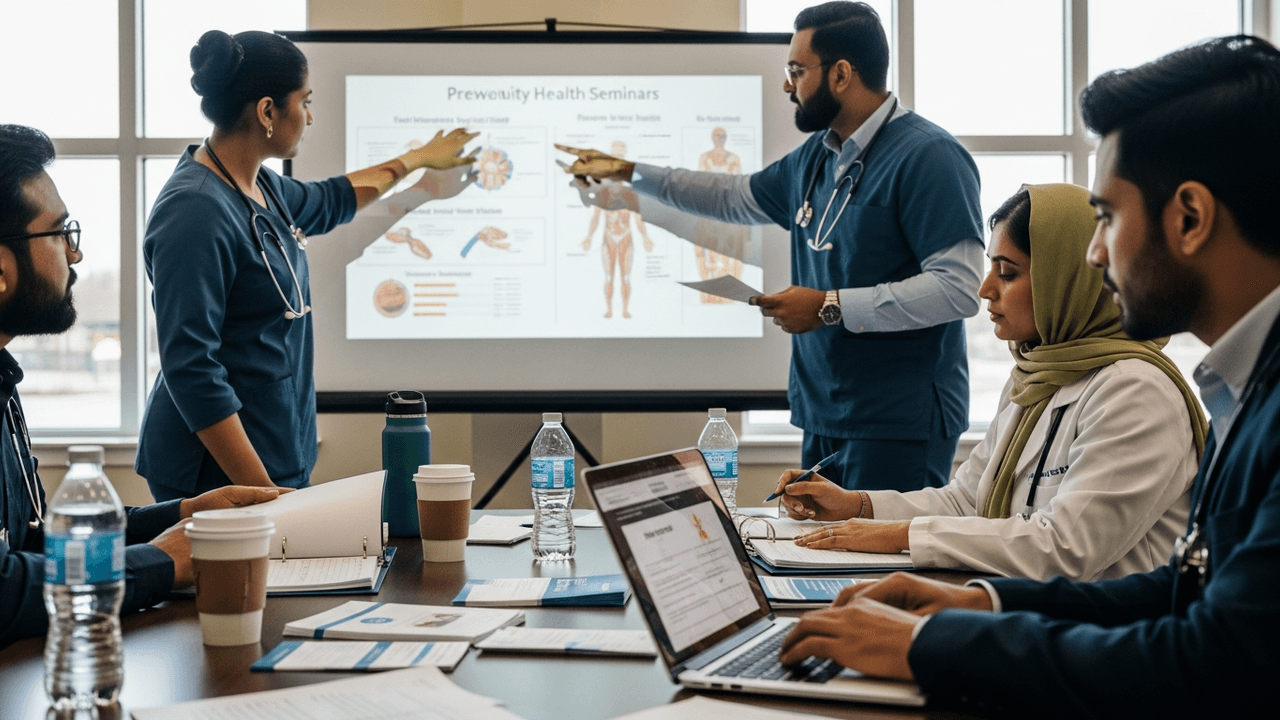
When medical professionals present at PASOR health seminars, their presentations reflect hours of careful preparation. Understanding their effort helps appreciate the value these volunteers bring to our community.
Audience-Centered Approach
Unlike presenting to medical peers, community health education requires different preparation:
Language Simplification: Medical jargon must be translated into everyday language without losing accuracy.
Cultural Context: Presentations incorporate understanding of Pakistani cultural beliefs and practices.
Relevance Focus: Content emphasizes what community members most need to know.
Visual Support: Diagrams, photos, and videos help explain complex concepts.
Research and Updates
Medical knowledge evolves constantly. Preparation involves:
Current Guidelines: Reviewing latest screening recommendations and treatment advances.
Community-Specific Data: Finding statistics relevant to Pakistani and South Asian populations.
Local Resources: Identifying Rochester-area healthcare options and services.
Question Anticipation: Preparing for questions community members are likely to ask.
Cultural Competence
Effective community education requires cultural sensitivity:
Understanding Beliefs: Awareness of cultural beliefs about illness, treatment, and prevention.
Addressing Barriers: Acknowledging and addressing reasons for avoiding care.
Appropriate Examples: Using scenarios and examples that resonate with Pakistani families.
Respect and Dignity: Presenting sensitive topics with appropriate sensitivity.
Collaboration with PASOR
Doctors work with PASOR to optimize presentations:
Topic Selection: Identifying most relevant health topics.
Format Planning: Determining presentation length, Q&A time, and activity integration.
Materials Development: Creating handouts and resources to distribute.
Follow-up Planning: Establishing how attendees can get additional help.
The Personal Investment
Beyond professional preparation, volunteer doctors invest personally:
Time: Hours of preparation plus event attendance, all donated.
Commitment: Ongoing dedication to community health education.
Mentorship: Guiding younger physicians in community engagement.
Advocacy: Speaking up for community health needs.
The Reward
What motivates this investment?
Impact: Seeing community members take action based on education.
Connection: Strengthening bonds with fellow Pakistani Americans.
Service: Fulfilling cultural and personal values around giving back.
Professional Fulfillment: Using medical training for community benefit.
How You Can Help
Support physician volunteers:
Attend Events: Your participation makes their effort worthwhile.
Ask Questions: Engagement validates their preparation.
Follow Recommendations: Act on the guidance provided.
Spread Word: Encourage others to attend health seminars.
Express Gratitude: Thank volunteers for their service.
Learn about our health education mission and upcoming events.
The doctors who serve our community deserve our appreciation and participation.