
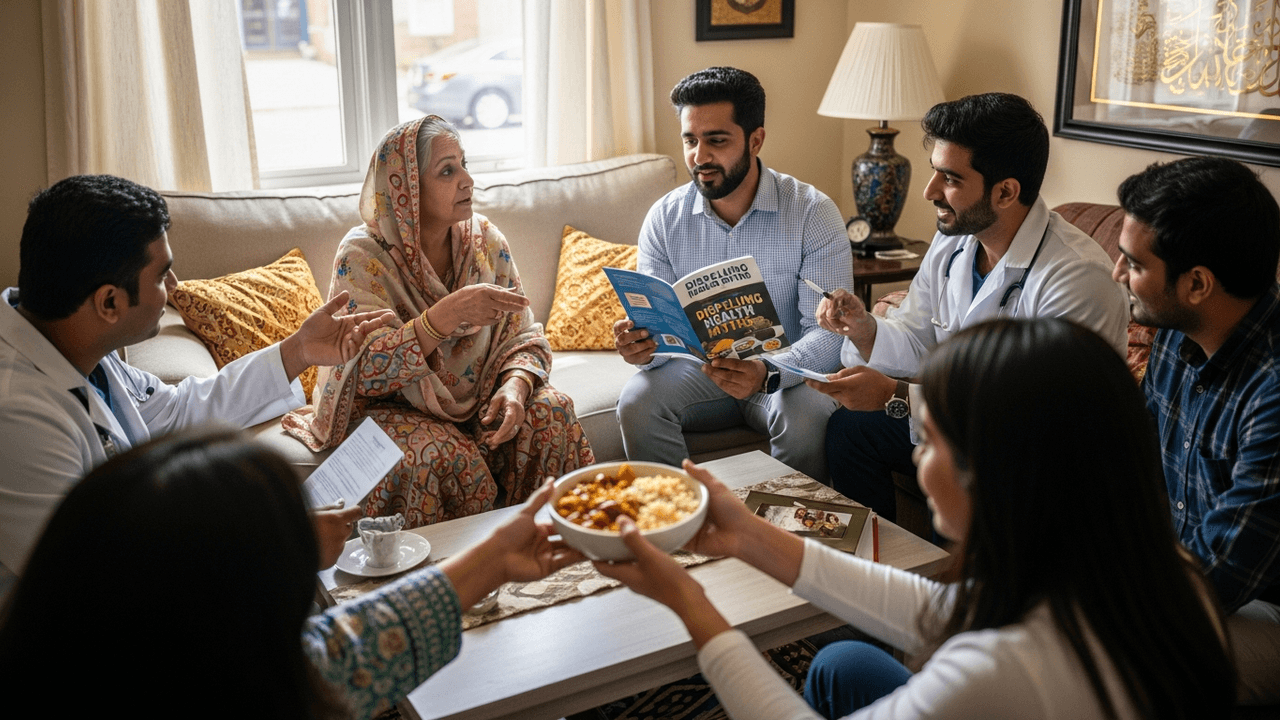
Separating Fact from Fiction
Health myths passed through generations can prevent families from seeking care or following medical advice. Understanding the truth helps protect your health and your family's wellbeing.
Myth: "We Don't Get Cancer"
Reality: South Asians are affected by cancer at similar or sometimes higher rates for certain cancers. The belief that "our people don't get cancer" is dangerous because it prevents screening.
Myth: "Diabetes Is Inevitable with Age"
Reality: While South Asians have higher diabetes risk, it's not inevitable. Prevention through diet, exercise, and weight management can significantly reduce risk.
Myth: "If I Feel Fine, I Don't Need Check-ups"
Reality: Many serious conditions—high blood pressure, diabetes, early-stage cancer—have no symptoms until advanced. Regular check-ups and screenings find problems early when treatment is most effective.
Myth: "Traditional Remedies Are Better Than Western Medicine"
Reality: Some traditional practices have benefits, but they should complement—not replace—evidence-based medicine. Don't delay seeking medical care for serious conditions.
Myth: "Mental Health Problems Are Character Weakness"
Reality: Mental health conditions are medical issues, not character flaws. Seeking help for depression, anxiety, or other conditions is a sign of strength, not weakness.
Myth: "Mammograms Cause Breast Cancer"
Reality: The radiation from mammograms is minimal and safe. Not getting screened is far more dangerous than the tiny radiation exposure.
Myth: "High Blood Pressure Is Normal as You Age"
Reality: While blood pressure may rise with age, hypertension should be treated. Uncontrolled high blood pressure leads to heart attacks, strokes, and kidney disease.
Myth: "Skinny People Can't Have Diabetes"
Reality: South Asians can develop diabetes at lower body weights than other groups. Weight alone doesn't determine diabetes risk.
Why Myths Persist
Cultural Transmission: Beliefs passed through generations.
Anecdotal Evidence: "My uncle lived to 90 without doctors."
Fear: Avoiding scary truths by denying them.
Mistrust: Unfamiliarity with Western medical systems.
Getting Accurate Information
PASOR provides evidence-based health education to counter dangerous myths. Our health events offer opportunities to ask medical professionals about concerns.
Don't let myths harm your health. Get the facts.