
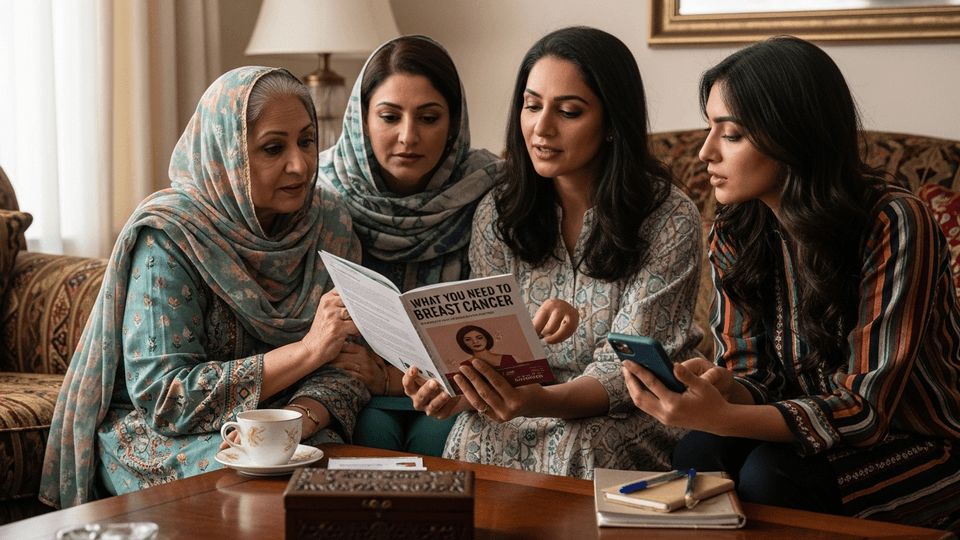
Breast Cancer Awareness for Our Community
Breast cancer is the most common cancer among women worldwide, including Pakistani American women. Understanding this disease—its risk factors, symptoms, and the importance of screening—can save lives.
This guide provides essential information that every woman in our community should know.
Understanding Breast Cancer
Breast cancer occurs when cells in the breast grow uncontrollably. It can occur in women of all ages, though risk increases with age.
Types:
- Ductal carcinoma: Starts in milk ducts (most common)
- Lobular carcinoma: Starts in milk-producing glands
- Inflammatory breast cancer: Rare but aggressive
- Triple-negative breast cancer: Lacks certain receptors, harder to treat
Stages: Range from 0 (non-invasive) to IV (metastatic/spread to other organs). Earlier stages have much better prognosis.
Risk Factors
Some factors increase breast cancer risk:
Non-Modifiable:
- Being female (men can get breast cancer too, but it's rare)
- Age (risk increases after 50)
- Family history of breast or ovarian cancer
- Genetic mutations (BRCA1, BRCA2)
- Early menstruation or late menopause
- Dense breast tissue
- Previous breast cancer or certain breast conditions
Modifiable:
- Obesity (especially after menopause)
- Lack of physical activity
- Alcohol consumption
- Hormone replacement therapy
- Not breastfeeding
- First pregnancy after 30 or never having children
Signs and Symptoms
Be aware of:
- Lump in breast or underarm
- Change in breast size or shape
- Dimpling or puckering of skin
- Nipple changes (inversion, discharge)
- Redness or flaky skin on breast or nipple
- Pain in any area of the breast
Important: Many breast changes are not cancer. But any changes should be evaluated by a doctor.
Screening Recommendations
Regular screening can find breast cancer early:
Mammograms: X-ray of the breast that can detect tumors too small to feel.
- Women 40-44: Option to start annual screening
- Women 45-54: Annual mammogram recommended
- Women 55+: Every 2 years (or continue annually)
Clinical Breast Exam: Physical examination by healthcare provider, recommended every 1-3 years for women in their 20s-30s.
Breast Self-Awareness: Know how your breasts normally look and feel. Report changes to your doctor.
Cultural Barriers to Screening
Pakistani American women may face barriers:
Modesty Concerns: Discomfort with breast examinations. Know that female technicians and providers are available.
Fear and Fatalism: Worry that finding cancer is a death sentence. Early detection dramatically improves outcomes.
Lack of Symptoms: Belief that screening is unnecessary if nothing feels wrong. Screening finds cancer before symptoms appear.
Family Priority: Putting family needs above personal health. Your family needs you healthy.
PASOR's health education programs address these barriers with culturally sensitive information.
Prevention Strategies
While not all breast cancer can be prevented, reduce your risk:
Maintain Healthy Weight: Especially important after menopause.
Exercise Regularly: 150+ minutes of moderate activity weekly.
Limit Alcohol: If you drink, limit to one drink per day or less.
Breastfeed: If possible, breastfeeding may reduce risk.
Limit Hormone Therapy: Discuss risks and benefits with your doctor.
Know Your Risk: Understand your family history and discuss with your doctor.
Genetic Counseling
If you have family history of breast or ovarian cancer:
Consider Genetic Testing: BRCA1 and BRCA2 mutations significantly increase risk.
Informed Decision-Making: Understanding your genetic risk helps guide screening and prevention decisions.
Family Implications: Genetic information can benefit family members too.
If You're Diagnosed
A diagnosis is frightening but not hopeless:
Seek Expert Care: Specialized breast cancer centers provide best outcomes.
Understand Your Options: Treatment depends on cancer type and stage.
Build Support: Family, friends, and support groups help with emotional burden.
Second Opinions: Appropriate for complex decisions.
PASOR Resources: Our community can connect you with support and resources.
Treatment Overview
Modern treatment options include:
Surgery: Lumpectomy (removing tumor) or mastectomy (removing breast)
Radiation: Kills cancer cells, often used after surgery
Chemotherapy: Drugs that kill cancer cells throughout body
Hormone Therapy: Blocks hormones that fuel certain cancers
Targeted Therapy: Attacks specific cancer cell characteristics
Immunotherapy: Helps immune system fight cancer
Supporting Loved Ones
If someone you know has breast cancer:
Be Present: Show up with emotional support.
Practical Help: Meals, childcare, transportation.
Listen: Sometimes they need to talk; sometimes just companionship.
Respect Privacy: Let them decide who knows.
Stay Connected: Support throughout treatment, not just at diagnosis.
Community Resources
PASOR connects you with:
Health education programs specifically for women
Medical professionals who can provide guidance
Support networks of community members
Screening resources and financial assistance
Take Action Today
- Schedule your mammogram if you're due
- Know your family history
- Practice breast self-awareness
- Maintain healthy lifestyle
- Attend PASOR health events
Learn about the importance of cancer screening and how early detection saves lives.
Your health is precious. Protect it.