When you think about mehndi, what comes to mind? This intricate art form isn’t just about beautiful patterns; it’s a deep-rooted tradition that binds families across generations. As you explore its history and significance, you'll discover how mehndi reflects cultural values and personal stories. But what happens when modern trends collide with these age-old practices? The answer might surprise you.
The Historical Roots of Mehndi: A Look at Its History
Mehndi, often associated with celebrations and ceremonies, actually has deep historical roots that trace back thousands of years. You might be surprised to learn that its origins date back to ancient Egypt, where it was used for body art and as a natural dye.
As you explore its history, you'll find that mehndi spread across cultures, adapting to local traditions and customs. In India, it became an integral part of wedding rituals, symbolizing joy and prosperity.
The intricate designs you see today evolved over centuries, influenced by regional styles and artistic expression. As you delve into this rich heritage, you’ll appreciate how mehndi not only beautifies but also connects generations through shared stories and traditions.
The Cultural Significance of Mehndi in Celebrations
While many people associate mehndi with special occasions, its cultural significance goes far beyond mere decoration. You’ll find that mehndi embodies celebration, love, and connection among families and friends. During weddings, festivals, and other significant events, applying mehndi fosters a sense of unity and joy.
It’s a way for you to express your creativity and individuality while also honoring tradition. Moreover, the intricate patterns and designs often tell stories, linking generations through shared experiences.
As you gather with loved ones, the act of applying mehndi transforms into a cherished ritual, deepening bonds and creating lasting memories. Ultimately, mehndi serves as a beautiful reminder of your cultural heritage, enriching celebrations with its historical and emotional significance.
Popular Mehndi Designs and Their Cultural Significance
When you explore popular mehndi designs, you’ll discover that each pattern holds a unique cultural significance that resonates with different traditions.
For instance, paisleys symbolize fertility and abundance, often used in weddings to bless the couple. Floral motifs represent beauty and growth, reflecting the harmony of nature. Geometric shapes, common in Indo-Islamic designs, signify unity and structure, connecting the past with the present.
Related: Building a Stronger Pakistani American Community in Rochester
The intricate mandala patterns, often found on palms, symbolize the universe and spiritual journey. As you admire these designs, remember that they’re not just art; they carry stories and values passed down through generations.
Each stroke and curve connects you to the rich cultural heritage that continues to thrive today.
Modern Mehndi Trends: Evolving Styles and Techniques
As cultural significance remains at the heart of mehndi, modern trends are reshaping how this ancient art is expressed. You might notice contemporary designs incorporating geometric patterns, floral motifs, and even abstract art, moving away from traditional styles.
Bold colors like white and gold are becoming popular, offering a fresh twist to the classic brown hue. You can also explore temporary options like henna tattoos that provide a playful, less permanent way to enjoy mehndi.
Social media platforms are buzzing with influencers showcasing unique styles, inspiring you to experiment. Whether you’re attending a wedding or celebrating a festival, modern mehndi allows you to express your individuality while honoring a cherished tradition, connecting you to generations past and present.
Applying Mehndi: Techniques and Tips
To achieve beautiful mehndi designs, mastering the application techniques is essential.
Start by preparing your skin; clean it thoroughly and exfoliate for better stain absorption. Choose a quality mehndi cone, ensuring it’s filled with fresh paste.
When applying, hold the cone at a comfortable angle and use gentle pressure for smooth lines. Practice basic shapes like spirals and paisleys before moving to complex designs.
Be steady; if you make a mistake, you can often fix it with a cotton swab dipped in lemon juice.
After completing your design, let it dry for at least four hours. To enhance the color, apply a mixture of sugar and lemon juice.
Finally, avoid water for the first 24 hours to ensure a deep, rich stain.
Related: Connecting Culture, Service, and Community in Rochester Through PASOR
Personal Stories: How Mehndi Connects Generations
Although many traditions fade over time, mehndi remains a vibrant link between generations, weaving a tapestry of memories and shared experiences.
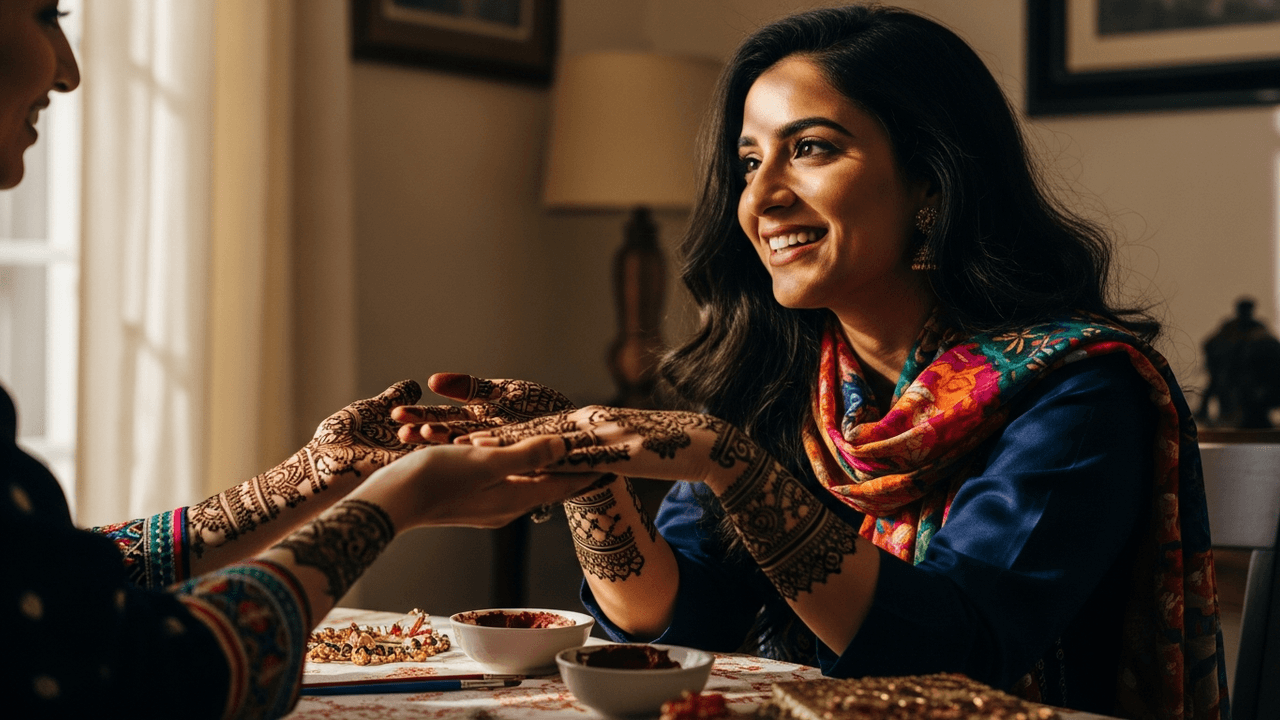
You might recall sitting beside your grandmother as she skillfully applied intricate designs on your hands, her stories blending with the scent of henna. Each swirl and curve tells a story, connecting you to your roots.
As you pass on this tradition to your children, you’ll find joy in watching their eyes light up with excitement. Mehndi isn’t just about the art; it’s about bonding moments, laughter, and love.
Each celebration becomes a canvas for family stories, allowing you to honor the past while creating new memories. In this way, mehndi truly connects generations, celebrating heritage and unity.
Caring for Your Mehndi: Tips for Long-lasting Results
When you want your mehndi to last longer and maintain its vibrant color, taking care of it right after application is crucial.
First, avoid water contact for at least six hours; this helps the dye set well. If possible, keep your hands warm, as heat enhances the color.
Once the mehndi's dry, gently scrape it off instead of washing it. This keeps the design intact.
To further deepen the hue, apply a mixture of lemon juice and sugar lightly over the design. Avoid lotions and soaps on the area for the first few days.
Lastly, keep your mehndi away from direct sunlight, as it can fade the color.
Conclusion
In conclusion, mehndi is more than just a beautiful art form; it’s a vibrant tradition that connects generations, celebrating culture and creativity. Whether you’re applying intricate designs for a wedding or simply enjoying the process at home, each stroke tells a story. Embrace this timeless ritual and share it with your loved ones, ensuring that the legacy of mehndi continues to flourish. So gather your family, unleash your creativity, and let the art of mehndi unite you all.